Postingan

Possible Nursing Diagnosis for Trigeminal Neuralgia
Gambar
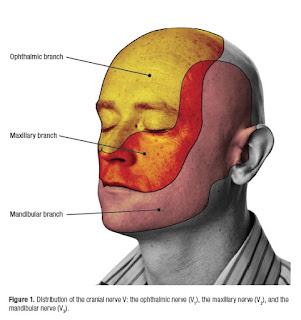
Trigeminal Neuralgia Neuralgia is a stabbing pain that arises occasionally, but short and heavy, which occurs along the distribution of a nerve. Trigeminal neuralgia (NT) is neuralgia on the trigeminal nerve (fifth cranial nerve) that is responsible for sensation in the face. Trigeminal neuralgia (facial pain) is characterized by brief episodes of strong facial pain, stabbing, and like electricity. According to Dr. Dito Anurogo, Trigeminal Neuralgia is a complaint of pain attacks one side of the face are repeated. Called trigeminal neuralgia, because facial pain occurs in one or more nerves than the three branches of Trigeminal nerve. This large nerve located in the brain and carries sensation from the face to the brain. The pain is caused by a disturbance in Trigeminal nerve function in accordance with the regional distribution of innervation of one branch of the trigeminal nerve caused by a variety of causes. Etilogy trigeminal neuralgia is still not fully understood. There is one th...
Disturbed Body Image NCP for Dermatitis

Gambar
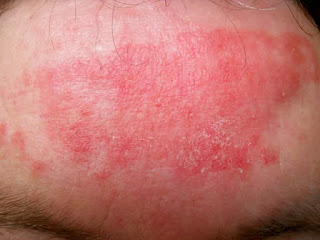
Nursing Care Plan for Dermatitis Dermatitis is inflammation of the skin. Dermatitis can have many causes and occurs in many forms. Dermatitis usually involves an itchy rash on swollen, reddened skin. Dermatitis is a common condition that's not contagious and usually isn't life-threatening. Even so, it can make you feel uncomfortable and self-conscious. Disturbed Body Image related to the appearance of the skin that is not good. Goal: Development of an increase in self-acceptance. Expected outcomes: Develop an increase in the willingness to accept a state of self. Follow and participate in self-care measures. Reported feeling in control of the situation. Reinforces the positive support of the self-governing. Express attention to self-healthier. Seemed not to notice the condition. Using a technique to hide flaws and emphasize techniques for improving the appearance. Interventions : 1. Assess the patient's self-image disturbance in (avoiding eye contact, self-deprecating speec...

Definition of Hypertension According to the Experts

Gambar
Hypertension is one of the cardiovascular system diseases that are often found in the community. Hypertension is not a contagious disease, but it should always be wary. High blood pressure or hypertension and arteriosclerosis are two basic conditions that underlie many forms of cardiovascular disease. Furthermore, high blood pressure also causes kidney disorders. Until now, efforts to both prevent and treat hypertension has not been entirely successful, because of the inhibiting factors such as lack of knowledge about hypertension (understanding, signs and symptoms, causation, complications) and also treatment. Various factors play a role in this case one of them is a modern lifestyle. Selection of fatty foods, unhealthy activity habits, smoking, drinking coffee are some of the things that is suspected as a factor that contributes to this hypertension. This disease can be the result of modern lifestyles and can also be a cause of various non-infectious diseases. To know more about this...

Nursing Care Plan for Trachoma

Gambar
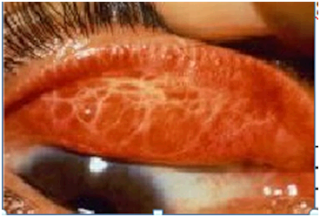
Trachoma is the world's leading cause of preventable blindness and the second cause of blindness after cataract. Blindness from trachoma occurs after years of repeated infection with the microorganism, Chlamydia trachomatis. The process of infection and re-infection starts in early childhood and may continue to adulthood, if the cycle is not broken. Women have a two to three times the rate of advanced trachoma and blindness than men, because as mothers, grandmothers and older sisters who care for children (the main source of active trachoma infection), they are redundant and are constantly exposed to bacteria. Trachoma is caused by Chlamydia trachomatis and is spread through direct contact with the eyes, nose, and throat are exposed to liquid (containing bacteria) of people living with, or in contact with inanimate objects, such as towels and / or rags, which once contact is similar to the liquid , Flies can also be a route of transmission. If left untreated, repeated trachoma infe...

Risk for Impaired Skin Integrity - NCP for Dysentery

Nursing Care Plan for Dysentery Dysentery is derived from the Greek, ie dys (= disorder) and enteron (= intestine). so dysentery is a gastrointestinal disease in the form of intestinal infection or inflammation of the intestines caused by bacteria, which causes severe diarrhea. Each individual course of the disease is more varied, with some people suffering from dysentery have mild symptoms, while others may experience severe diarrhea with or without vomiting which can pose a risk of dehydration. Fortunately dysentery can be easily treated with antibiotics and antiparasitic drugs. Dysentery if untreated can lead to severe dehydration. The most common cause of dysentery and is often found in people are not washing hands after using public restrooms or not washing hands before eating. Indeed simple enough to cause dysentery as a classic case, but that the reality is often the case. Broadly speaking, the cause of dysentery is closely related to the cleanliness of our surroundings and cl...

Imbalanced Nutrition : Less than Body Requirements - NCP Diabetic Ketoacidosis

Nursing Care Plan for Diabetic Ketoacidosis Diabetic Ketoacidosis (DKA) is a potentially life threatening condition of diabetes occurring mostly in patients with Type 1 diabetes but on occasion also in patients with Type 2 diabetes. This disease is a potentially fatal complication of diabetes that occurs when insulin levels are far lower than what the body needs. The most frequent early signs of Diabetic Ketoacidosis or DKA is a sharp increase in polydipsia and polyuria. Whilst Polydipsia means excessive thirst, Polyuria refers to the excessive production of dilute urine. Other symptoms include malaise, generalized weakness, and tiredness. These may then progress if untreated to vomiting, deep gasping breathing (kussmaul respiration), dehydration, rapid weight loss in patients newly diagnosed with Type 1 diabetes, mild disorientation, confusion and occasionally coma. Imbalanced Nutrition : Less than Body Requirements related to the insufficiency of insulin, decreased oral input, hyper...

NCP for Congenital Heart Disease : Assessment, Nursing Diagnosis and Interventions

Gambar
Nursing Care Plan for Congenital Heart Disease Congenital Heart Disease (CHD) is a heart disease which is inborn, because it occurs when a baby still in the womb. At the end of the seventh week of pregnancy, heart formation is complete; so the formation of cardiac abnormalities occur in early pregnancy. Causes of Congenital Heart Disease (CHD) often can not be explained, although several factors are considered as a potential cause (Rahayoe, 2006). Congenital heart defects is heart defects or malformations that appear at birth, in addition to congenital heart disease is a disorder of the heart anatomy brought from conception to birth. Most congenital heart defects include structural malformations in the heart and major blood vessels, both the left and that leads to the heart (Nelson, 2000). This disorder is the most common congenital abnormalities in children, about 8-10 of 1,000 live births. This congenital heart defect does not always give symptoms shortly after birth, it is not unco...