Postingan

Menampilkan postingan dengan label hypertension

Definition of Hypertension According to the Experts

Gambar
Hypertension is one of the cardiovascular system diseases that are often found in the community. Hypertension is not a contagious disease, but it should always be wary. High blood pressure or hypertension and arteriosclerosis are two basic conditions that underlie many forms of cardiovascular disease. Furthermore, high blood pressure also causes kidney disorders. Until now, efforts to both prevent and treat hypertension has not been entirely successful, because of the inhibiting factors such as lack of knowledge about hypertension (understanding, signs and symptoms, causation, complications) and also treatment. Various factors play a role in this case one of them is a modern lifestyle. Selection of fatty foods, unhealthy activity habits, smoking, drinking coffee are some of the things that is suspected as a factor that contributes to this hypertension. This disease can be the result of modern lifestyles and can also be a cause of various non-infectious diseases. To know more about this...
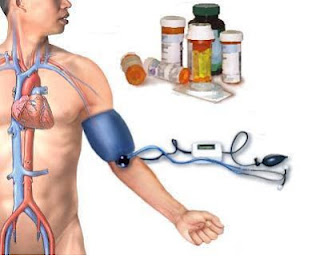
Nursing Interventions Risk for Decreased Cardiac Output in Hypertension

Gambar
Nursing Interventions Risk for Decreased Cardiac Output in Hypertension Nursing Diagnosis: Risk for Decreased Cardiac Output - Nursing Care Plan for Hypertension Risk for Decreased Cardiac Output related to vasoconstriction Expected outcomes are: Clients participating in activities that lower blood pressure / load cardiac work, maintaining blood pressure within an acceptable range of individuals, showing stable norms and cardiac frequency in the normal range. Nursing Intervention: 1. Observation of blood pressure (the ratio of pressure to give an overview more complete, the involvement / field of vascular problems). 2. Note the presence, quality of the central and peripheral pulsation (throbbing carotid, jugular, radial and femoral probably observed / palpation. 3. Auscultation of heart and breath sounds tone. (S4 commonly heard in patients with severe hypertension due to atrial hypertrophy, the development of S3 showed ventricular hypertrophy and malfunction, the presence of crackles...

Nursing Management of Hypertension

Nursing Assessment for Hypertension Basic Nursing Assessment data by Doenges (1999) : Activity / Rest Symptoms: weakness, fatigue , shortness of breath, monotonous lifestyle. Signs: The frequency of the heart increases, changes in heart rhythm, tachypnoea. Circulation Symptoms: History of hypertension, atherosclerosis, coronary heart disease / valve and cebrocaskuler disease, episodes of palpitations. Signs: The increase in BP, pulse throbbing clear from the carotid, jugular, radial, tachycardia, valvular stenosis murmur, jugular venous distension, pale skin, cyanosis, cold temperature (peripheral vasoconstriction) filling the capillary may be slow / delayed. Ego Integrity Symptoms: History personality changes, anxiety, multiple stress factors (relationship, financial, work related). Signs: Explosion mood, anxiety, continue narrowing of attention, tears burst, face muscles tense, breathing heaved, increased speech patterns. Elimination Symptoms: Impaired renal current or (such ...

Nursing Care Plan for Hypertension

Gambar
Nursing Care Plan for Hypertension Hypertension Hypertension (HTN) or high blood pressure is a chronic medical condition in which the systemic arterial blood pressure is elevated. It is the opposite of hypotension. It is classified as either primary (essential) or secondary. About 90–95% of cases are termed "primary hypertension", which refers to high blood pressure for which no medical cause can be found. The remaining 5–10% of cases (Secondary hypertension) are caused by other conditions that affect the kidneys, arteries, heart, or endocrine system. Persistent hypertension is one of the risk factors for stroke, myocardial infarction, heart failure and arterial aneurysm, and is a leading cause of chronic kidney failure. Moderate elevation of arterial blood pressure leads to shortened life expectancy. Dietary and lifestyle changes can improve blood pressure control and decrease the risk of associated health complications, although drug treatment may prove necessary in patien...

Nursing Care Plan Hypertension: Severe

HYPERTENSION: SEVERE I.Pathophysiology—malignant or cancerous tumor, starting from the cells of the breast tissue and occurring primarily in women, although men may also be affected. b. Types (NCCN, 2007) i. This is cout3. This is cout3. This is cout3. This is cout3.This is cout3. A. Pathophysiology—malignant or cancerous tumor, starting from the cells of the breast tissue and occurring